Shayne Cuffy. CX and product design leader.
I work where customer insight meets design strategy. Twenty plus years turning research, service mapping, and complexity into clear, actionable frameworks that drive real decisions and meaningful outcomes for end users, teams, and the business.
How I think about design.
These are the principles I try to bring to every project, whatever the sector.
Rally people around the problem, not the solution
Any room full of smart people can generate a hundred ideas. The work gets sharper when those ideas are aimed at a clearly defined problem. Most of my best work has started with a single question: what are we actually trying to solve here?
People over pixels
What end users actually do in the real world is messy. That messiness matters more than polished designs that look beautiful in a deck but don't address the real human behind them. As AI makes output cheaper, this matters more than ever.
Design is about outcomes, not output
This is my clearest answer to anyone worried about AI replacing design. The output is easy now. The outcome is the work.
Challenge bias whenever possible
Especially on projects with legacy success. It's easy to assume we know the end user, the problem, the territory. The question I keep asking is: is there another conversation we could be having?
How I actually work.
Most UX talks present design as a clean, stepped, empathy-first process. I've never seen a project start with empathy. I've seen them start with a vague brief, a half-formed idea, or a solution someone's already attached to. The real work is fighting from uncertainty to certainty. Using what you know, talking to whoever you can, finding patterns, getting to a prototype, testing, learning.

When a vague brief lands on my desk, my process tends to look like this:
- 01Agree the outcome before the brief. What would this project have done if it had done its job?
- 02Use that outcome to filter every subsequent decision. It's not us versus the client. It's a shared destination.
- 03Do a little research before going back to them. Bring a sketch of who the end user might be.
- 04Run a workshop. Half a day. Surface what we know, what we don't, what assumptions we've been making.
- 05Redefine the brief based on what the workshop reveals. The brief gets honest because the outcome is the anchor.
On AI and design.
I'm an active AI advocate, not because it's fashionable, but because I've been working with these tools long enough to see what they actually do.
What changesUser research that used to take three weeks can take an afternoon. First-draft personas, journey maps, and insight reports can start with AI and get refined by humans. Teams scale beyond headcount.
What doesn'tThe hard work of clarifying the problem. The relationship work with clients. The judgement about whether a design serves the outcome. The craft of mentoring people to think well.
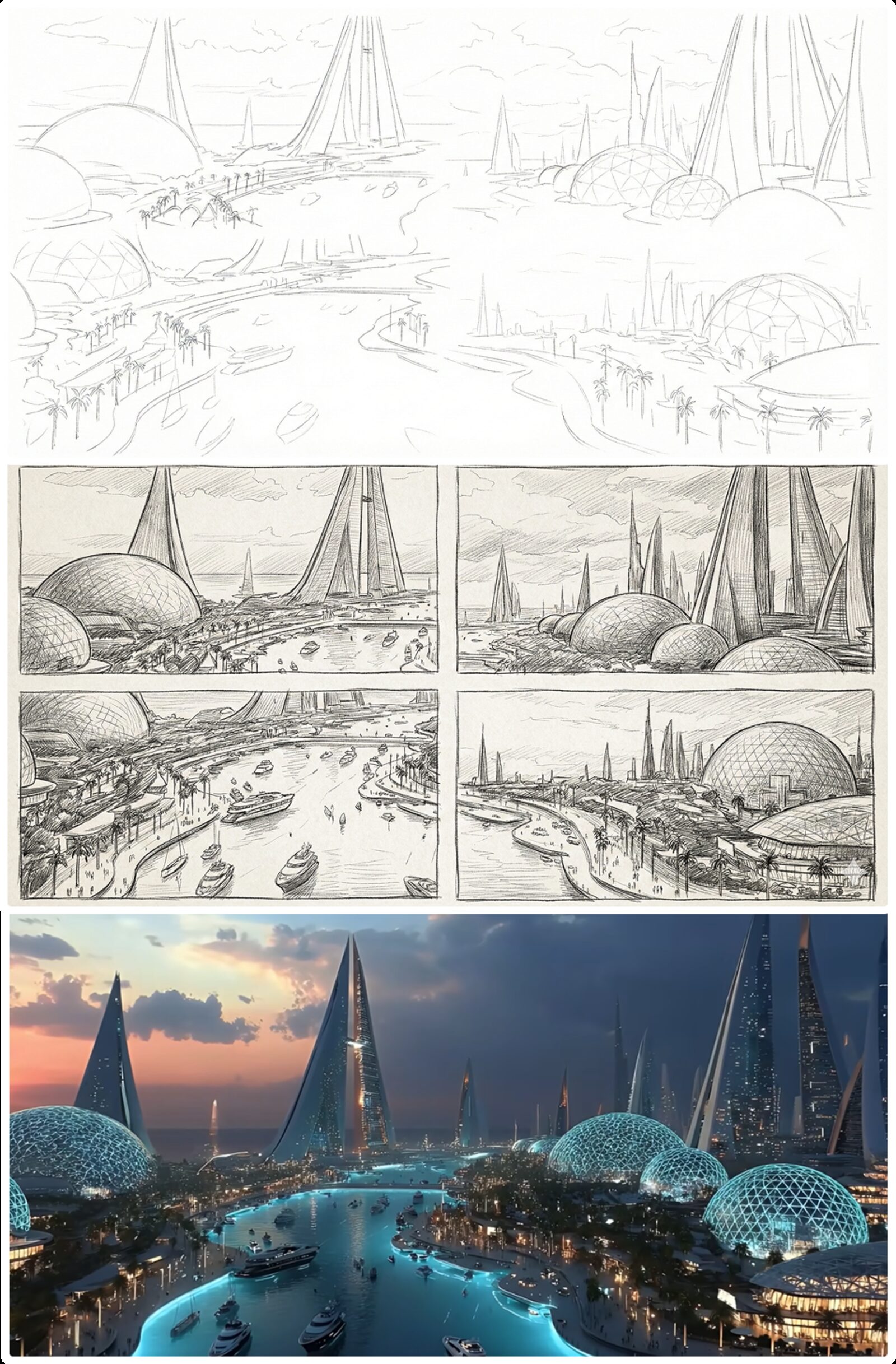
At BMI Group I've embedded Claude and Gemini into my team's daily practice. Not as a replacement. As a way to compress the time between brief and prototype, so more attention can go to the questions that matter.
Leadership and mentorship.
I currently lead a small distributed team across the UK, Ukraine, Poland and India at BMI Group. The work is twofold. Build the practice. Build the people.
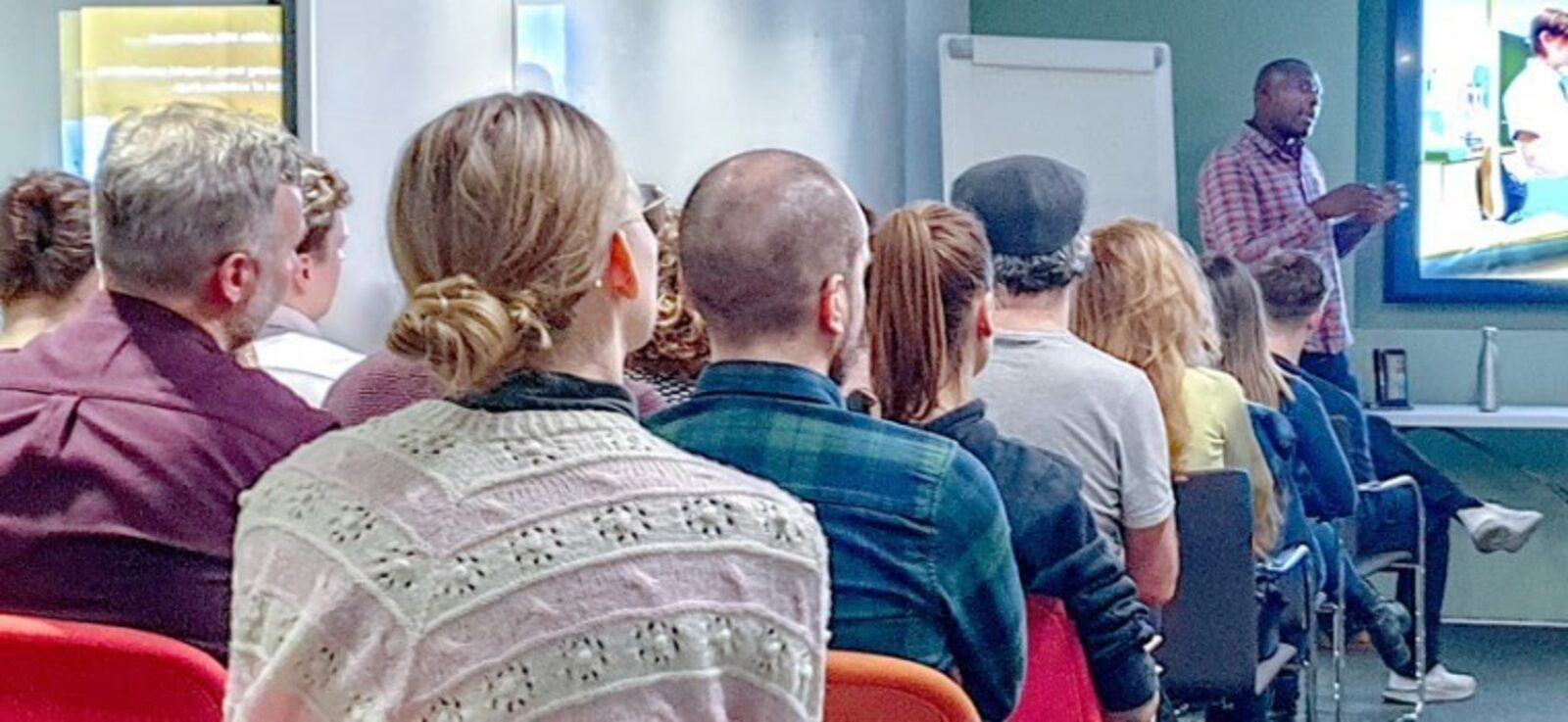
Leadership is making other people more capable.
The role of a senior designer is to be the person colleagues come to with a half-formed idea, not someone who only acts on a perfect brief. I work hard to be that person, internally and for clients.
I mentor emerging designers continuously, inside my teams and outside them. I want them confident, making mistakes, learning, and communicating their work clearly to customers and the business.
Sectors and selected clients.
Across the last 20 plus years, the work has moved between:
- CX & productNationwide, S&P Global, Argos in Sainsbury's, MoneySuperMarket, SAP Global
- Healthcare & pharmaBayer, Pfizer, Novo Nordisk, Janssen, ViiV, plus pro-bono work with ABC on advanced breast cancer
- TelecomsMitel, Vodafone
- FinTechIRIS, IN-SYNC, Nationwide
- Media & marketingMindshare (WPP), and across the IPG agency network
Featured in Meta and The Drum's documentary series on UX and e-commerce strategy for small businesses.
Beyond work.
I live in Hampshire with my wife and two daughters. We spend time on the water whenever we can. I'd travel every day of my life if I could.
I'm a minister, which means I get to do wedding talks and similar speaking engagements. The public-speaking muscle shows up in how I run client calls.
I love basketball. I don't play it nearly as often as I'd like. I coach groups together whenever life allows.
I'm a Marvel fan.
A senior brief where design becomes commercially indispensable.
- A senior brief where design becomes commercially indispensable
- An organisation that sees design as a commercial driver, not a delivery function
- AI used pragmatically to amplify the team, not replace craft
- A mix of strategy and hands-on team building, with room to mentor people as they grow
Not a stepping stone. The next chapter of work I'm already doing. If that sounds like a conversation worth having, I'd love to hear from you.
- Featured on 28 Days of Web
- Forrester CX Certified
- Usability Testing, Interaction Design Foundation
- Vibe Coding L2 Silver, Lovable, 2026
- Marketing Operations & Management, B2B Marketing