Healthcare · Patient empowerment
Pfizer × WPP
Helping women walk into the doctor’s office knowing what they want.
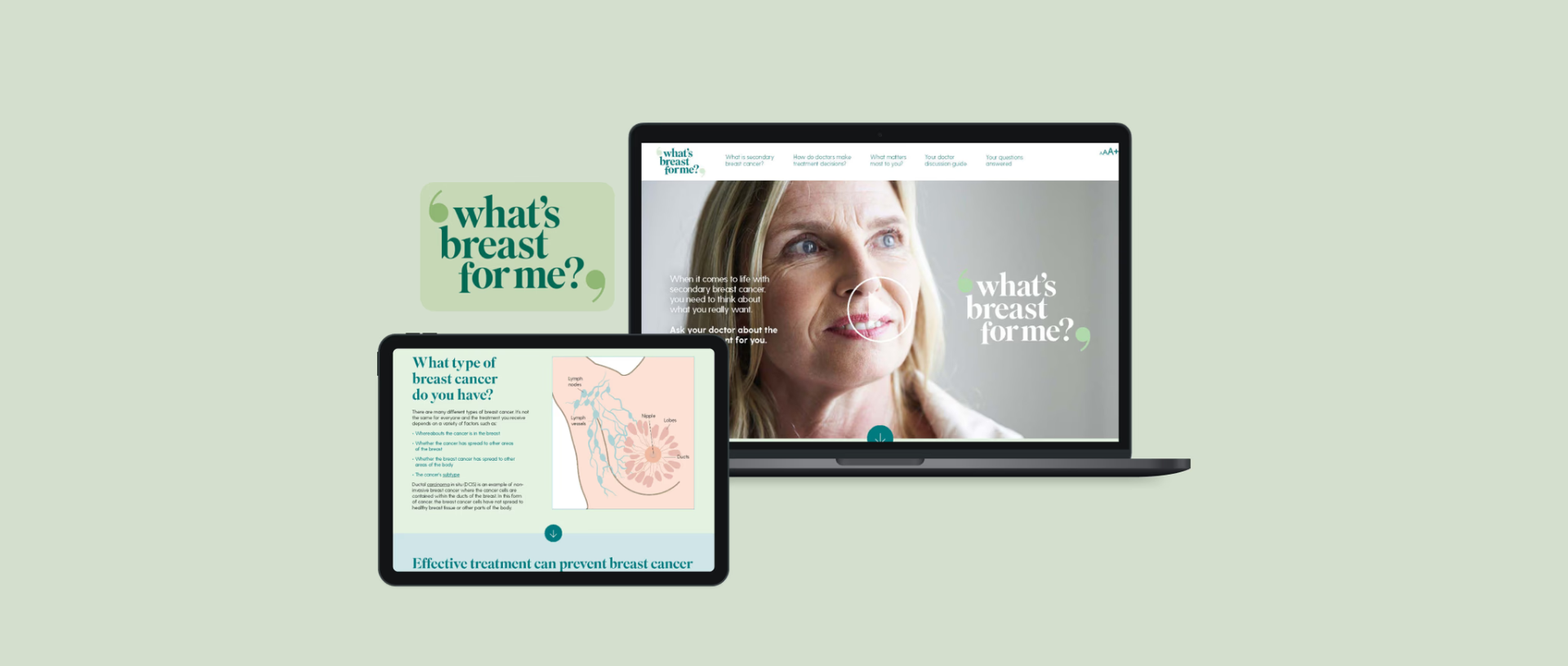
Helping women with advanced breast cancer walk into the doctor’s office knowing what they want, not just what they’re offered.
The business problem
Inform without ranking, inside hard legal lines
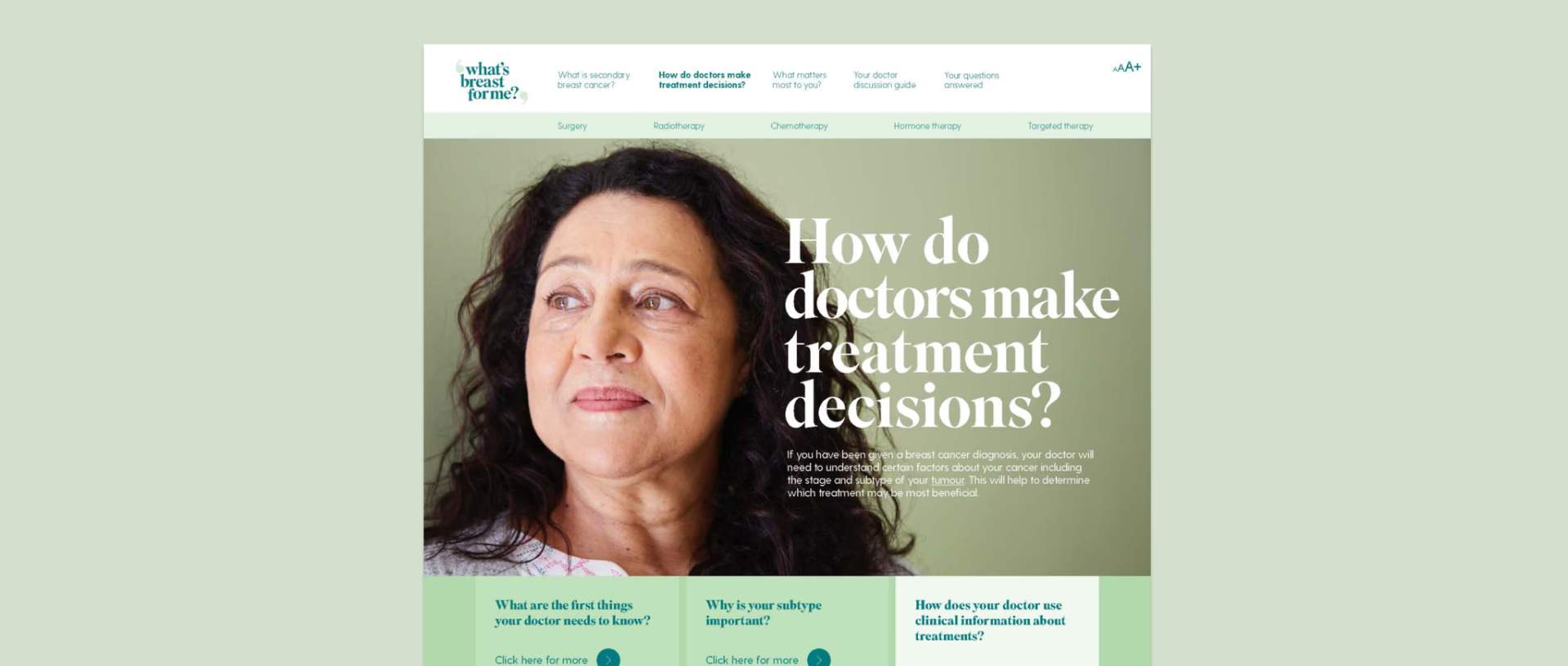
In a tightly regulated healthcare space, we could not present any one treatment as better than another. Every option had to be shown equally, nothing visually or verbally suggested as superior.
The challenge was to inform without ranking, inside hard legal and ethical limits.
The user problem
Passive recipients, when they could be active participants

In the consult room
The first option offered isn’t always the right one.
Too often, the first treatment an HCP mentions isn’t necessarily the best one for the patient, sometimes shaped by cost or default rather than the person in front of them.
Many women didn’t know they could ask for other options before that first session was booked. They were arriving as passive recipients of care, when they could have been active participants.
The approach
Back to basics: what could she hold in her hands?
We asked one question: what could a woman hold in her hands that would help her understand what she wanted, not just what she was told to do?
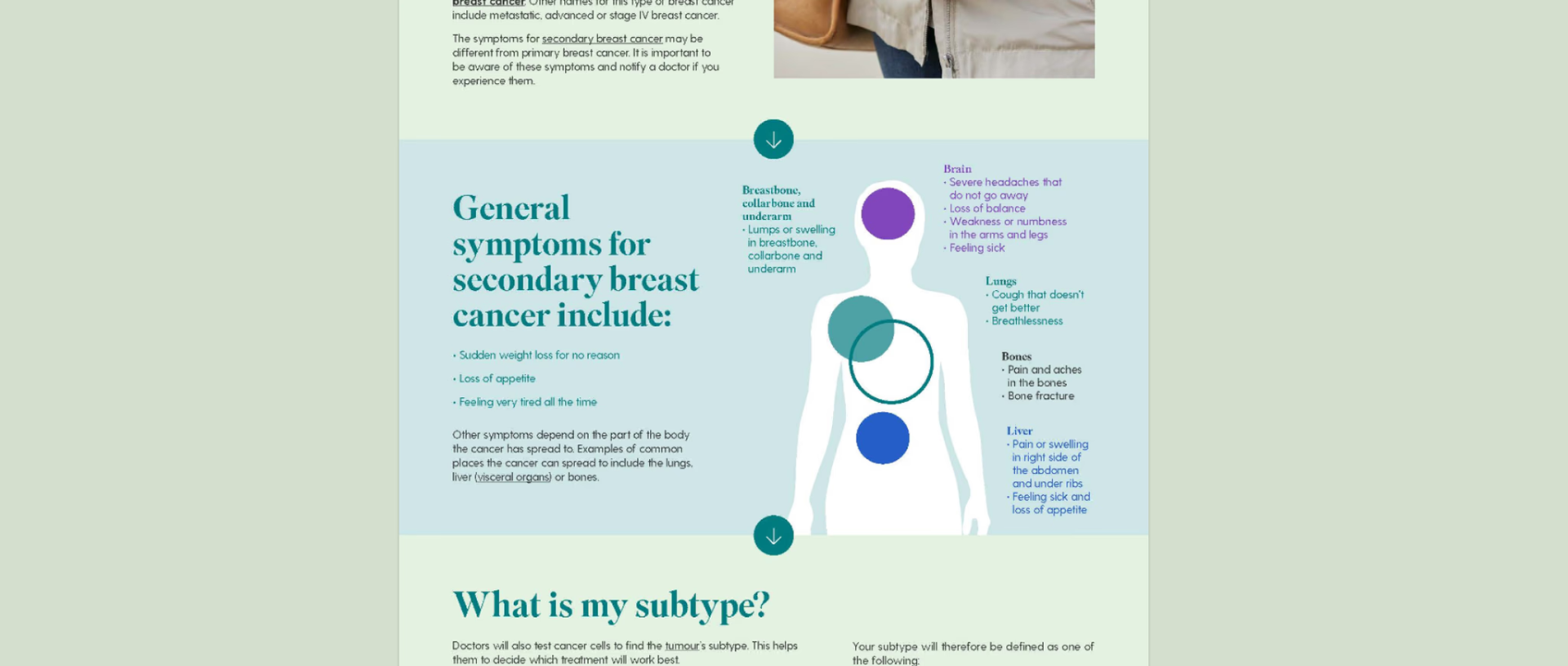
The answer was a worksheet she could take to her appointment, designed to help her think through what she wanted from her life and what was available to her, before the conversation with her HCP. Alongside it, a film of a woman walking through doors in her life, reflecting on what she wanted, before arriving at her doctor to have that conversation on her own terms. And a website tying it all together.
The whole thing flipped the dynamic. Instead of the doctor leading and the patient following, the patient arrived ready to lead the conversation.
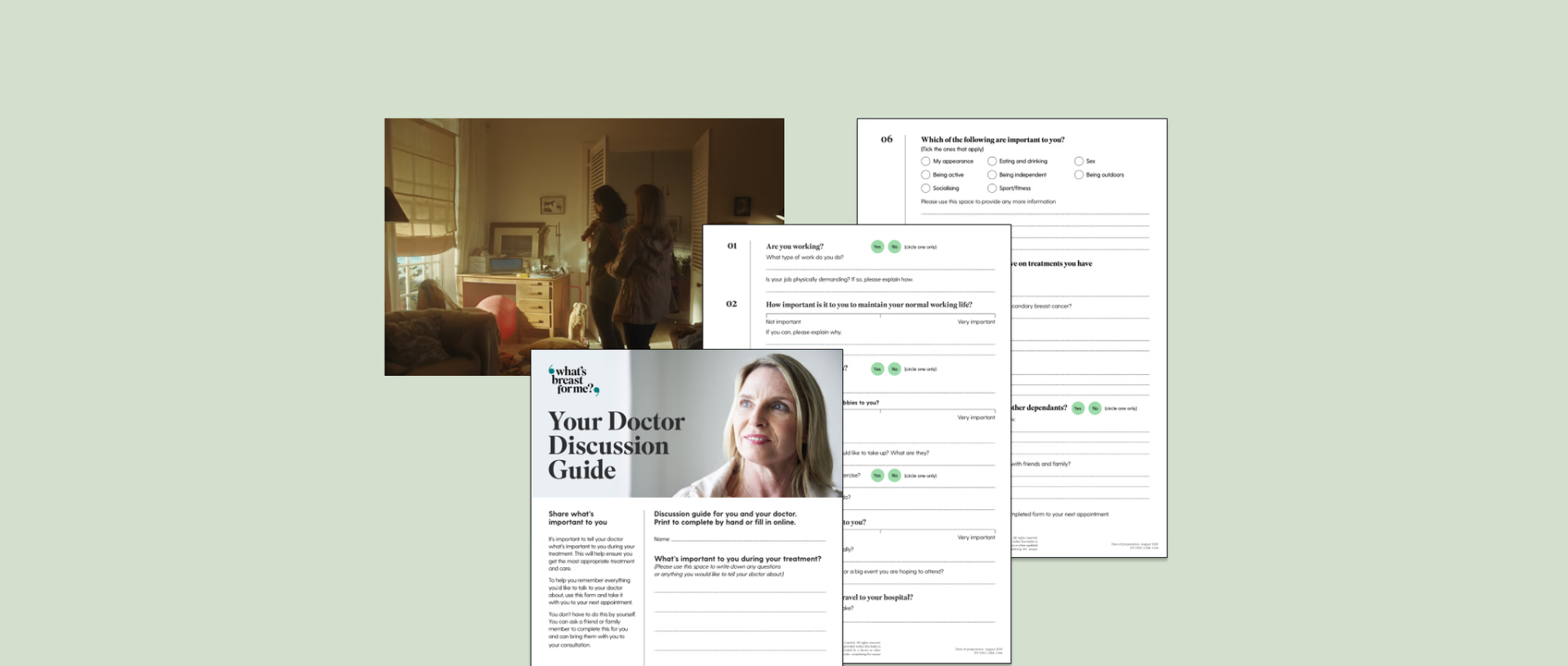
The system in use
A worksheet, a film, a site, one conversation
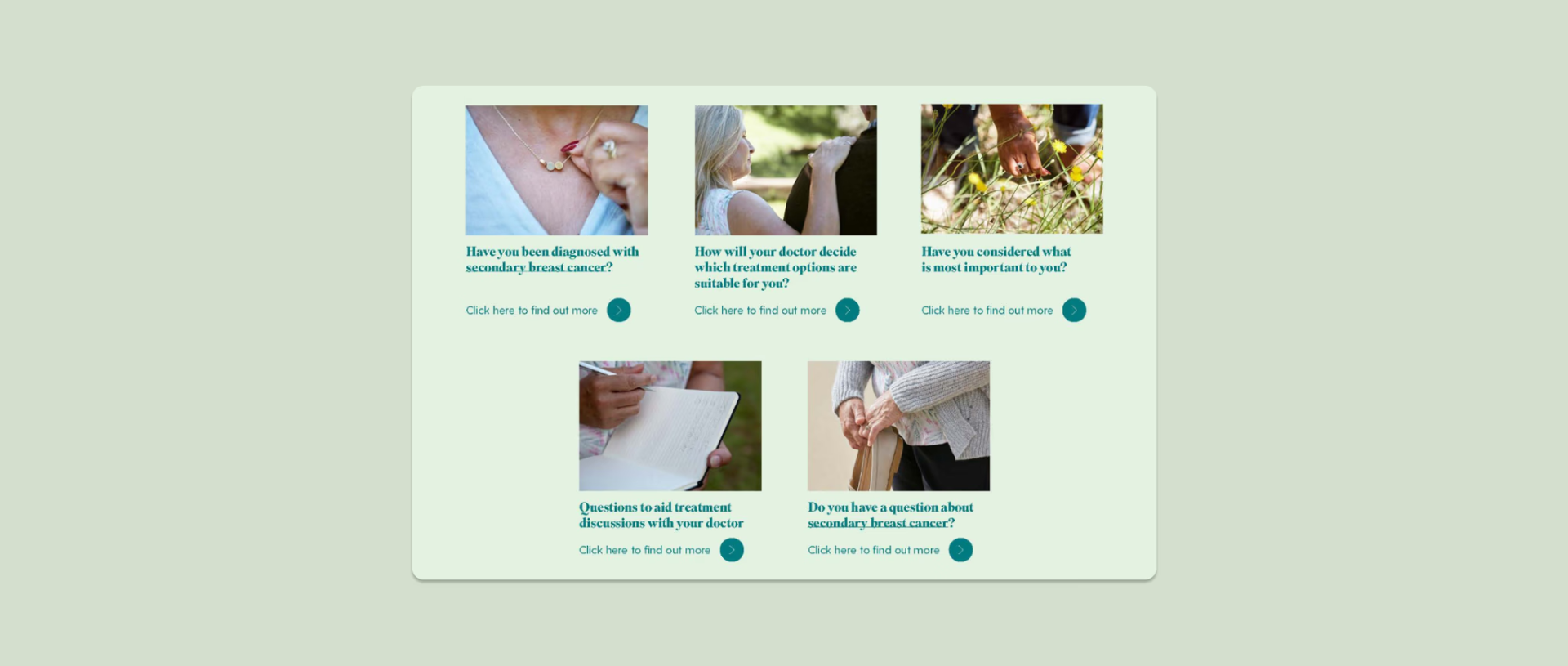
Each artefact pointed back to the same goal: give her the language and structure to walk in prepared. The site held the educational backbone, the worksheet became her notes, and the film gave her permission to imagine what she actually wanted from her life beyond the diagnosis.
The hard part
Warmth and compliance, held at the same time

Craft under constraint
Every option, displayed with complete equality.
Designing inside strict legal and ethical guidelines while still making something genuinely useful. No treatment could be hinted at as the better path. That constraint sat at the heart of the project.
The craft was in creating something warm, human and empowering that still held the regulatory line absolutely. It only worked through close collaboration with medical art directors, creative writers and legal experts, balancing creativity with compliance at every step.
The outcomes
From accepting treatment to choosing it
We gave women the tools and knowledge to approach their treatment as active participants in their own health decisions. By educating them on their options before the doctor’s visit, the work helped them have informed, confident conversations about their treatment plans, moving the default away from simply accepting the least expensive or first-offered option, and towards a model of patient-led decision-making.
“The craft was in creating something warm, human and empowering that still held the regulatory line absolutely.”
- Client
- Pfizer
- Agency
- WPP
- My role
- Product & UX design lead
- Collaboration with
- Medical art directors; Creative copywriters; Legal & regulatory; Project manager
- Programme
- Breast for Me