Healthcare
Pfizer | VML Health
Interactive Installations
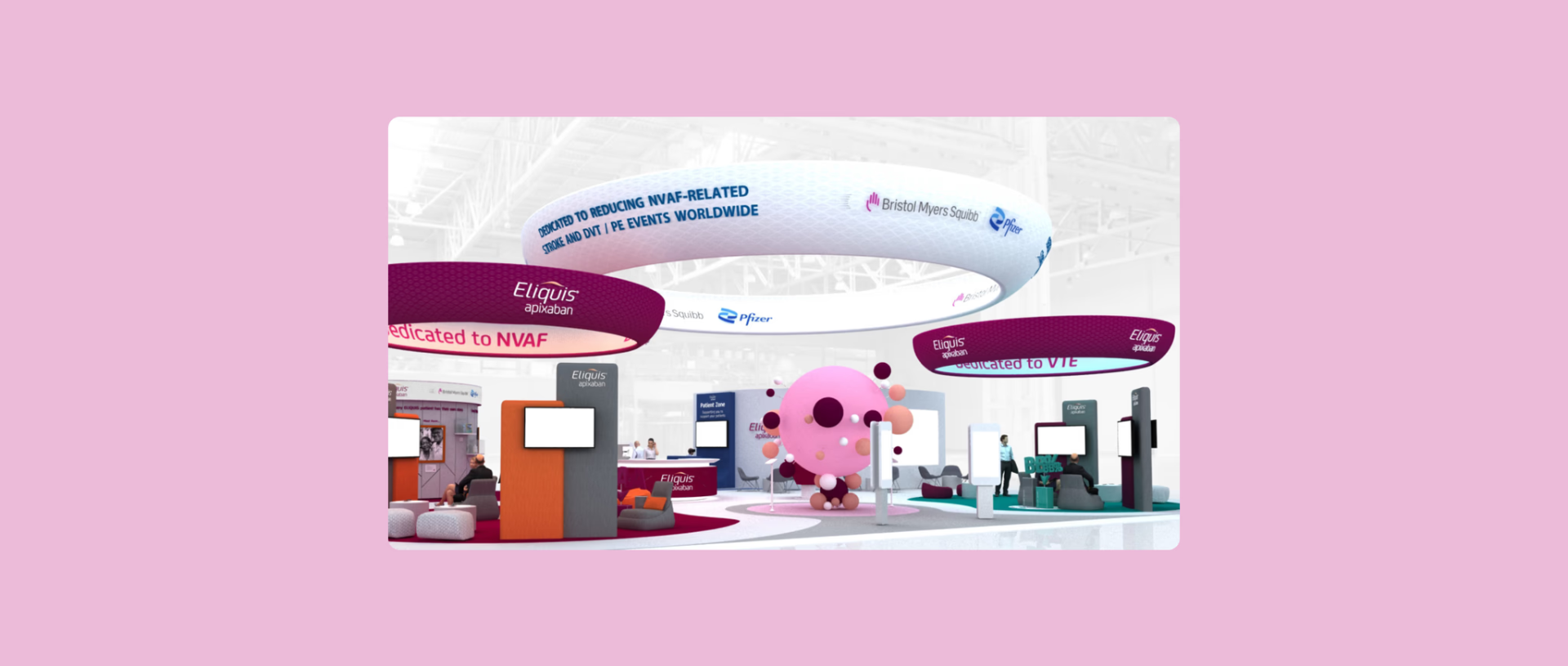
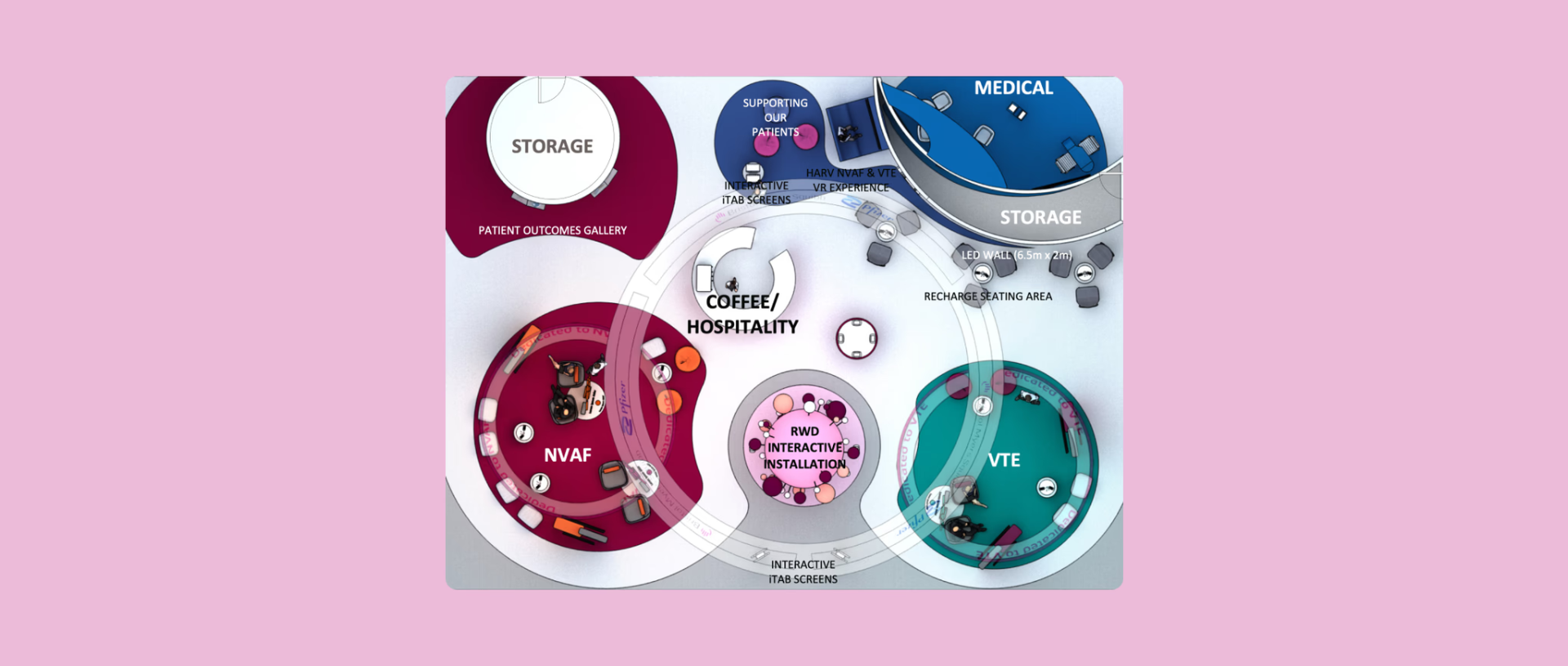
Physical installations for medical congresses, designed during Covid to be touch-free, built around QR codes before that was the obvious answer.
The problem
The business problem
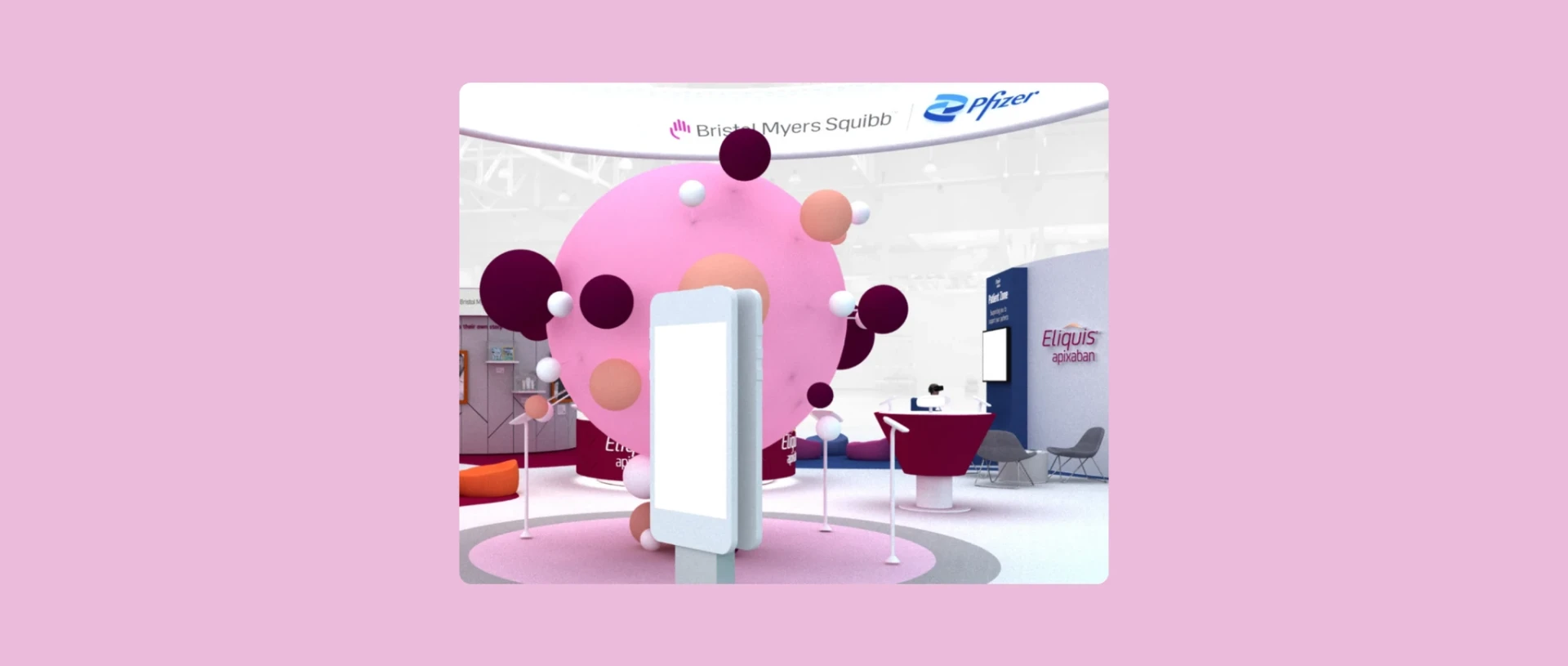
Pfizer needed to engage healthcare professionals with their latest devices and treatments in physical event spaces. The pandemic made in-person interaction fraught. The installations had to work in a congress environment while respecting distance and safety.
The user problem
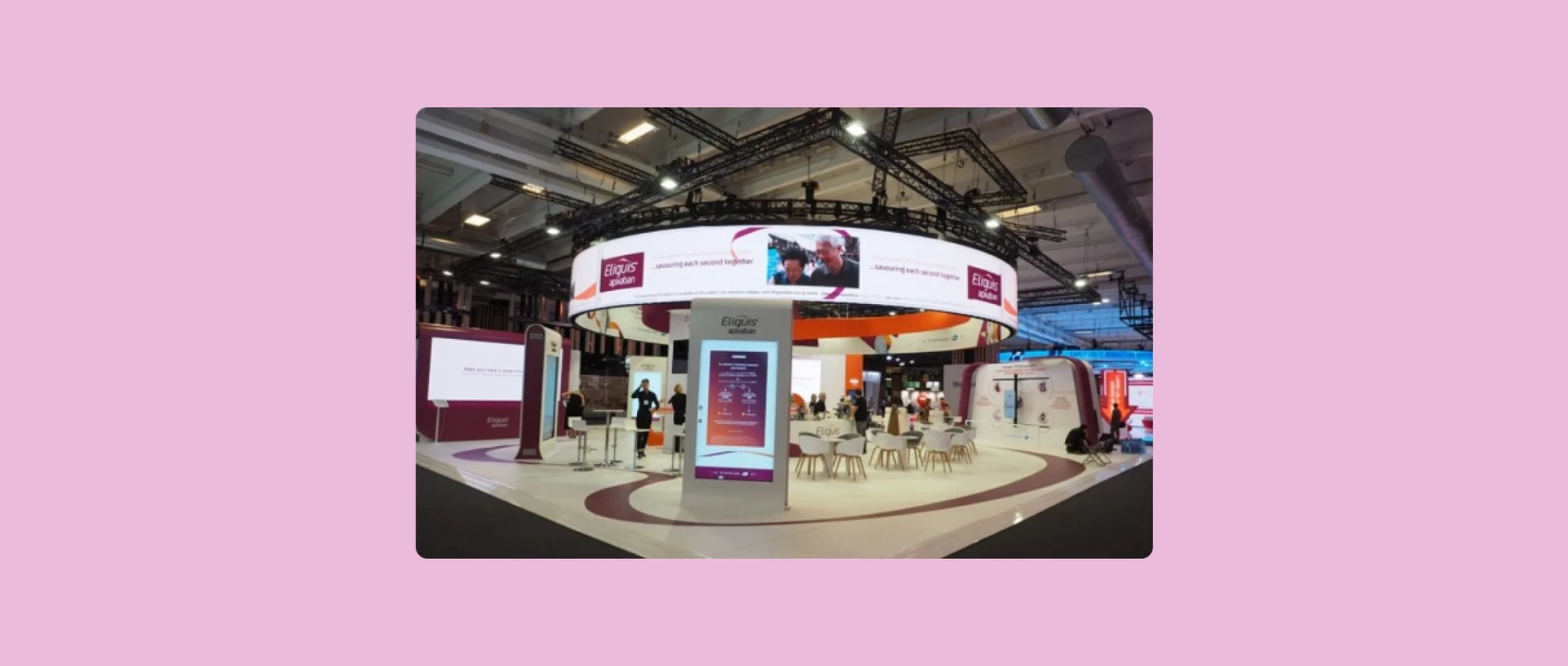
Healthcare professionals still wanted to learn, explore, and connect in person. After long periods of isolation, the instinct to be in a shared space was strong. They needed a way to interact with the content without crowding around shared touchscreens.
The approach
Phones as the interaction surface
We moved the interaction off shared touchscreens and onto people's own phones. Information for HCPs sat behind QR codes, and the experience played out on each person's own device, in their own space. Common now. Genuinely innovative at the time.
There was real pushback. Pfizer questioned the design direction during Covid, reasoning that no one would want to be close to anyone once it was over. We held a different view: that people would desperately want to be together again, to learn and interact in shared spaces. So we designed for distance on the surface, while building for the human pull back towards each other underneath.
The hard part
A bet against the prevailing logic
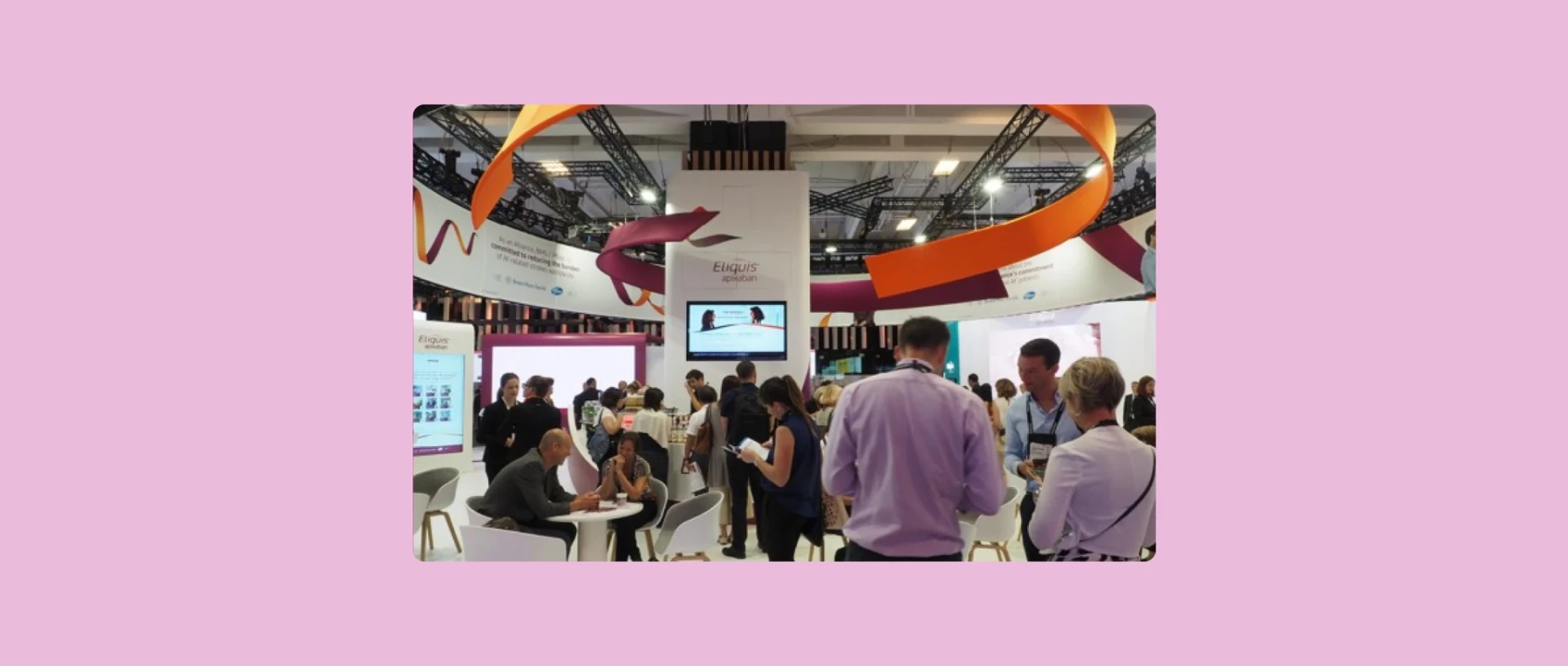
We made a bet against the client's instinct and our own short-term brief. We designed a light installation built for people to gather around at a time when the prevailing logic said keep everyone apart. Holding that line took conviction, because if we were wrong, the installation would have felt tone-deaf.
We listened on safety, kept the distancing, moved the touchpoints to phones. But we backed the deeper read on human behaviour.
“We designed for distance on the surface, while building for the human pull back towards each other underneath.”
The outcomes
People wanted to be in the room
We were right. Once restrictions eased and the installations went live in real spaces, healthcare professionals flocked to them. They wanted to be in the space, to learn, and to interact with each other again. The pivot to mobile-first, QR-led interaction proved both timely and effective, and showed how adaptive design and a clear read on real behaviour can turn a constraint into an advantage.
- Client
- Pfizer
- Agency
- VML Health (WPP)
- My role
- Product & UX Design Lead
- Collaborating with
- Research, Art Director, Medical AD, Copy & Legal